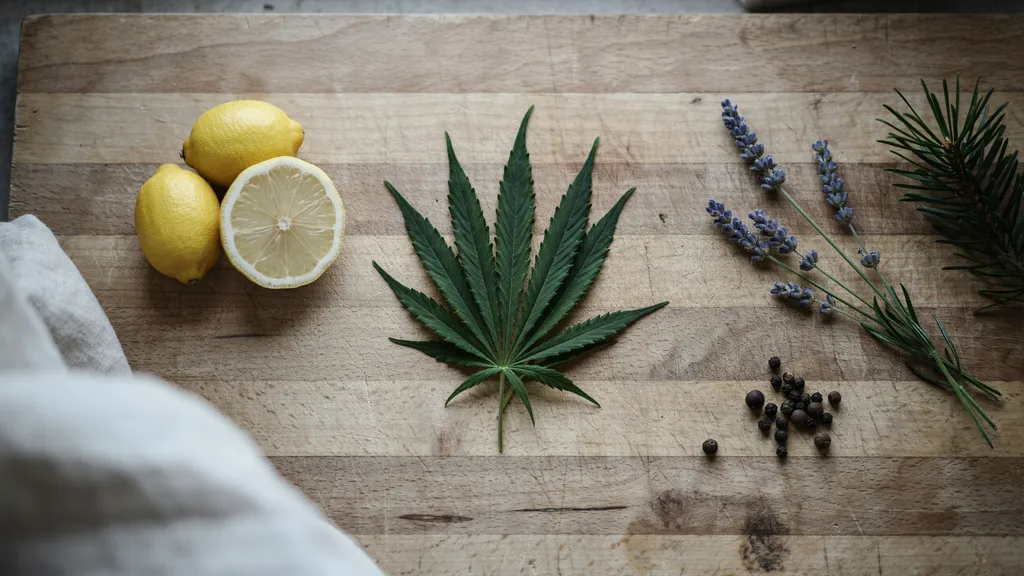
Terpenes are aromatic compounds found in many plants. They give lemons, pine needles, lavender, and hemp their distinctive scents.
Common Terpenes in Hemp
| Terpene | Aroma | Also Found In |
|---|---|---|
| Myrcene | Earthy, musky | Mangoes, hops |
| Limonene | Citrus | Lemons, oranges |
| Pinene | Pine | Pine needles, rosemary |
| Linalool | Floral | Lavender |
| Caryophyllene | Peppery, spicy | Black pepper, cloves |
Why They’re on Labels
Terpenes shape flavor and aroma. Some brands add terpenes back into products or blend them to mimic named strains.
The “Entourage Effect”
Some people believe cannabinoids and terpenes work better together. The idea is popular, but research supporting it in humans is still limited.
Natural vs. Added Terpenes
Some products keep the hemp plant’s natural terpenes. Others remove them during processing and add terpenes back — sometimes hemp-derived, sometimes from other plants. Lab reports may list terpene content.
Terpenes Are Everywhere
You already encounter terpenes daily — in citrus peels, herbs, spices, and essential oils. They’re widely used in foods, cleaning products, and cosmetics for flavor and scent.
Safety Notes
Concentrated terpenes can irritate skin or lungs. Use products as directed, and be cautious with vaping products, where heating additives can create harmful byproducts.
Quick Summary
- Terpenes are aromatic plant compounds
- They shape flavor and smell
- Many CBD products list or add terpenes
- The entourage effect is still being studied
Frequently Asked Questions
Do terpenes get you high?
No. Terpenes aren’t intoxicating.
Are terpenes safe?
In normal amounts in food and products, generally yes.
Can terpenes affect mood?
Some research is ongoing, but evidence is limited.
Leave a Reply