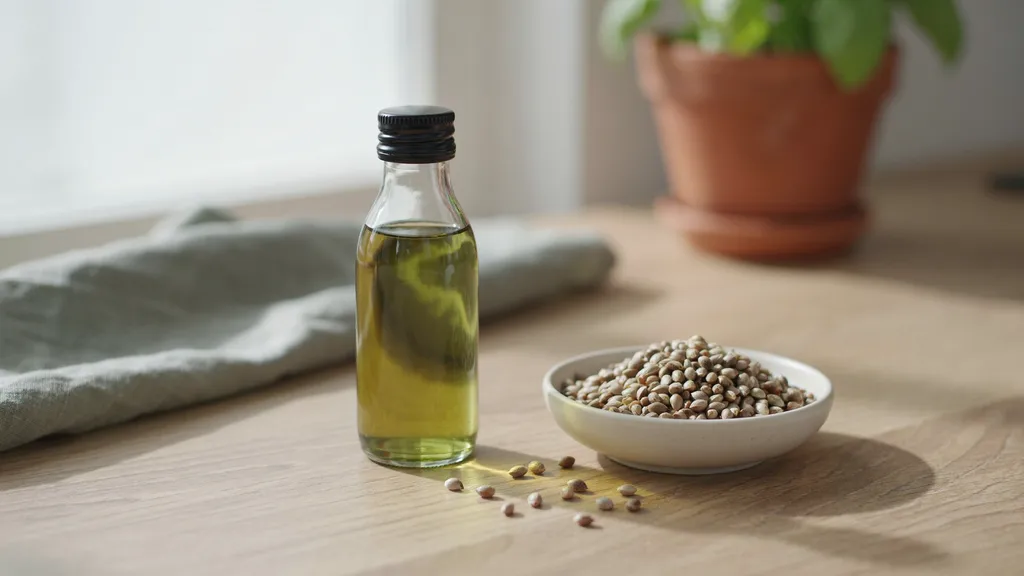
Hemp seed oil and CBD oil sound similar but are very different products.
Hemp Seed Oil
- Pressed from hemp seeds
- Contains little to no CBD
- Rich in omega-3 and omega-6 fatty acids
- Used in cooking, smoothies, and skincare
- Sold in grocery stores
CBD Oil
- Extracted from hemp flowers and leaves
- Contains measurable CBD
- Usually mixed with a carrier oil such as MCT oil
- Labeled with CBD amount per serving
How to Tell on a Label
Look for “cannabidiol” or a stated CBD amount in milligrams. Ingredient lists that only say “Cannabis sativa seed oil” usually mean hemp seed oil. A COA should confirm cannabinoid content.
Why the Confusion Happens
Some online sellers list hemp seed oil with images and wording that suggest CBD, sometimes at high prices. Because the words “hemp” and “cannabis” appear on both products, shoppers can easily mix them up.
Uses for Each
- Hemp seed oil: Salad dressings, smoothies, and moisturizers. It has a low smoke point, so it’s not ideal for high-heat cooking.
- CBD oil: Taken by mouth or added to foods according to label directions.
Price as a Clue
Genuine CBD oil is usually more expensive than hemp seed oil because extracting and testing CBD costs more. A large bottle of “hemp oil” at a very low price is likely seed oil.
Quick Summary
- Hemp seed oil comes from seeds and has little CBD
- CBD oil comes from flowers and leaves
- Look for milligrams of CBD on the label
- Check lab results to confirm
Frequently Asked Questions
Can hemp seed oil cause a positive drug test?
It’s unlikely, but some products may contain trace cannabinoids.
Is hemp seed oil healthy?
It contains healthy fats but is high in calories like other oils.
Can I cook with CBD oil?
Low heat is best; high heat may degrade CBD.
Leave a Reply